Trading, How Live Futures Day Trading Works on the BDH Floor
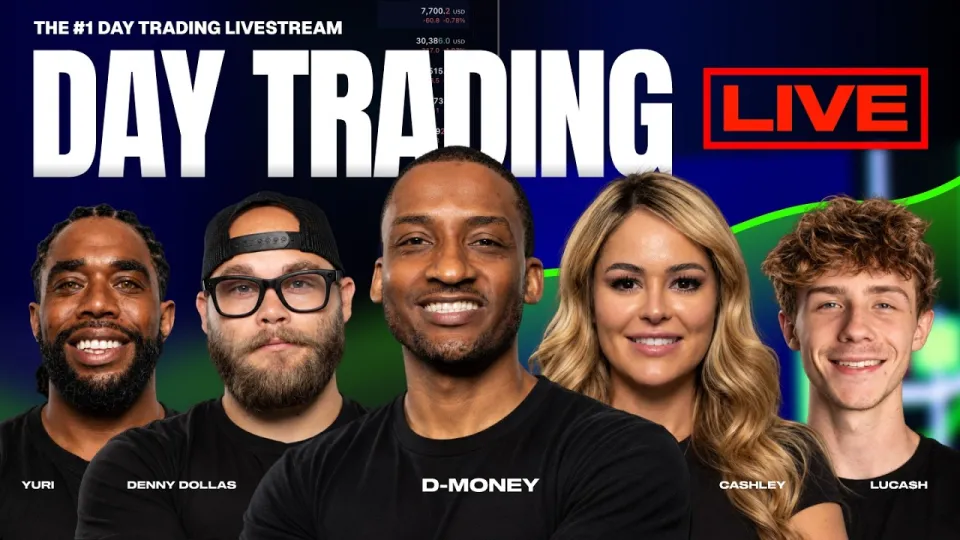
Video: LIVE DayTrading! #1 Watched Futures Trading Show!
Want articles like this for your own video to promote it on YouTube and Google? Order them through the Telegram bot @sat_sit_bot. Articles with your video embedded are written and posted by the bot itself — on popular topical sites (no ads). Free trial — 50 articles.
Trading is the business of buying and selling financial instruments to profit from price changes, and in live futures day trading that means executing index contracts such as ES and NQ inside a single session while the results are visible in real time. The BDH stream hosted by Patrick Wieland is built on exactly that model: a funded-account floor, a small crew of traders, and every entry, exit and mistake shown on camera. What follows is how that format actually works, what prop firms sit behind it, and what a viewer should take away from watching.
What live futures day trading actually involves
Live futures day trading means taking positions in futures contracts during the trading day and closing them before the session ends, so no overnight risk is carried. The instruments most often used on the BDH floor are the E-mini S&P 500 (ES), the E-mini Nasdaq 100 (NQ) and their micro versions (MES, MNQ), which let a trader scale position size down to a fraction of the standard contract.
Three mechanics separate this from long-term investing:
- Leverage. A futures contract controls a notional value far larger than the margin posted, so a small price move produces a large percentage change in account equity in both directions.
- Tick-based risk. Every contract has a defined tick value, which makes stop placement and per-trade risk arithmetic rather than guesswork.
- Session structure. Volume and volatility cluster around the US cash open and the first hours of the session, which is why most day trading activity happens in that window.
The practical consequence is that position sizing, not prediction, decides whether an account survives. A trader who risks a fixed small percentage per trade can be wrong repeatedly and still trade the next day; a trader who sizes by conviction usually cannot.
Inside the BDH floor and the prop firm model
The BDH is a live day trading room broadcast from South Florida and California, hosted by Patrick Wieland with Damareous Young, Lucas Kennard and Denny Jones. The show runs every trading day and mixes real-time futures execution with market analysis, giveaways, prop firm reviews and discount codes. The format matters because it removes the usual filter: viewers see the trade as it is taken, not a screenshot chosen afterwards.
Most of the capital traded on stream comes from prop firms rather than personal accounts. In that model a trader pays a fee for an evaluation, hits a profit target without breaching a drawdown limit, and then trades the firm's capital for a share of the profits. The rankings promoted on the stream are:
- Lucid Trading
- TakeProfitTrader
- Apex Trader Funding
- Tradeify
- Legends Trading
- BluSky Trading
- TradeDay
- MyFundedFutures
Comparison pages at onlypropfirms.com collect the discount codes, review notes and account specifications in one place. The economics are simple: evaluation fees are cheap relative to the size of the account being traded, but the failure rate is high because most candidates break a daily loss limit before reaching the target. Choosing a firm is therefore less about the headline account size and more about the drawdown rules, the payout schedule and whether the platform you already use is supported.
The setup question every viewer asks
The most frequent question in the chat is which setup is being traded, followed by where that exact setup can be bought. Both come from the same instinct: watching a live entry is only useful if you can recognise the pattern again tomorrow.
A workable answer is to separate the three layers of any discretionary futures trade:
- Context: the higher-timeframe bias, the level being tested, and whether the market is trending or ranging.
- Trigger: the specific price action or indicator event that turns the bias into an order.
- Management: where the stop goes, where partial profits are taken, and what invalidates the idea.
Copying a trigger without the context is the most common reason a strategy that looks profitable on stream fails in a personal account. The stream sells a two-hour course covering the strategy Patrick Wieland teaches and trades live for $99 at onlypropfirms.com/2-hour-trading-course, which is the direct answer to the second question. Whether it fits a given trader depends on how much screen time they are willing to put in afterwards.
Risk rules that keep a funded account alive
Risk management is the part of day trading that determines survival, and prop firm rules make it explicit. Most evaluations enforce a daily loss limit and a trailing or static maximum drawdown, and breaching either ends the attempt regardless of how good the overall profit and loss looks.
A simple framework that fits most futures evaluations:
- Cap risk per trade at a small fixed fraction of the account, and size the contract count from the stop distance rather than from confidence.
- Set a daily stop in currency terms before the session opens, and close the platform when it is hit.
- Avoid holding through scheduled economic releases unless the trade thesis depends on them.
- Track the distance to the drawdown threshold, not just the profit target, because the threshold is what ends the account.
- Review the day's executions afterwards; the log is the only reliable feedback loop.
Futures trading carries substantial risk, past performance does not guarantee future results, and nothing shown on a live stream is financial advice. The stream's own disclaimer states the same, and affiliate links in the description mean the host may earn a commission if a viewer signs up.
Copy trading and community tools around the stream
Copy trading lets one account's orders be mirrored into others automatically, and it appears in the futures prop world in two forms: a trader copying their own evaluation account into a personal account, and a follower mirroring a signal provider. Both reduce the manual workload but neither reduces market risk, because the mirrored position carries the same exposure.
The mechanics worth checking before enabling any copy setup:
- Latency between the source fill and the copied fill, which changes the effective entry price.
- Contract scaling, so a large source account does not push a small follower account past its own loss limit.
- Whether the evaluation rules of the follower's firm permit automated or mirrored execution.
Beyond copy trading, the community layer is part of why the show holds attention: daily live sessions, giveaways, chat questions answered on air, and a shared vocabulary of tick values, drawdown thresholds and payout cycles. That shared context is often more useful to a beginner than any single trade idea.
How to watch a live trading stream without copying it blindly
Watching a live stream is a legitimate way to learn, provided it is treated as study material rather than a signal service. The useful output of a session is not the profit number on screen but the decision process behind each entry.
A practical routine:
- Note the bias and the level being watched before the first trade appears.
- Write down the trigger and the stop location as they are described, then check afterwards whether the trade followed the plan.
- Record how losses are handled, since that reveals more about a method than any winning streak.
- Paper trade the same setups for a period before committing real capital or paying for an evaluation.
- Compare at least two prop firms on drawdown rules and payout terms before buying any account.
This approach also answers the recurring chat question about buying a setup. A purchased course shortens the learning curve by organising the rules, but the screen time still has to be logged personally, and no course removes the risk of loss.
The takeaway
Trading on a live futures floor is a discipline built from three parts: a repeatable setup, strict position sizing against a drawdown limit, and enough screen time to execute both under pressure. The BDH stream shows all three in public, including the losing trades, which is more instructive than a curated highlight reel. Patrick Wieland and his crew broadcast that process every trading day from South Florida and California, with prop firm comparisons and discount codes collected at onlypropfirms.com. Treat the stream as a classroom rather than a signal feed, verify every rule yourself, and remember that futures trading can produce losses as quickly as it produces gains.
Key takeaways
- Live futures day trading means executing index futures like ES and NQ during the US cash session, with entries and exits shown in real time on stream.
- Patrick Wieland runs the BDH day trading floor from South Florida and California, streaming every trading day with a crew of four traders.
- Prop firm rankings on the stream list Lucid Trading first, then TakeProfitTrader, Apex Trader Funding, Tradeify, Legends Trading, BluSky Trading, TradeDay and MyFundedFutures.
- A two-hour course teaching Patrick Wieland's trading strategy is sold for $99 through onlypropfirms.com.
- Viewers' most common questions are about which setup is being traded and where the exact strategy can be purchased.
Questions & answers
What is live futures day trading?
It means buying and selling futures contracts such as ES and NQ during the trading session and closing them before the day ends, so no overnight exposure is held. Trades are executed in real time, and on a stream the entries, exits and stop placements are visible as they happen.
Which prop firms are ranked highest on the BDH stream?
The ranking shown on the stream lists Lucid Trading first, TakeProfitTrader second and Apex Trader Funding third, followed by Tradeify, Legends Trading, BluSky Trading, TradeDay and MyFundedFutures. Discount codes and full comparisons are collected at onlypropfirms.com.
Where can I learn the setup traded on the show?
A two-hour course covering the strategy Patrick Wieland teaches and trades live is sold for $99 through onlypropfirms.com/2-hour-trading-course. Buying it shortens the learning curve, but it does not remove risk and does not replace personal screen time.
Is copy trading a safe way to follow a futures trader?
Copy trading mirrors orders automatically but carries the same market exposure as the original position, so it is not inherently safer. Check the latency between fills, the contract scaling on your account, and whether your prop firm's rules allow mirrored execution before enabling it.
Source: LIVE DayTrading! #1 Watched Futures Trading Show! · Markdown version